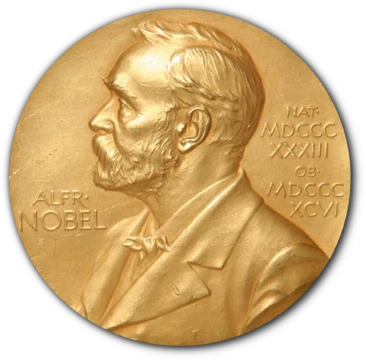
Selman Waksman
Award named after Selman Waksman, first awarded in 1968, recognizing excellence in microbiology.

The Selman A. Waksman Award in Microbiology is awarded by the U.S. National Academy of Sciences in recognition of excellence in the field of microbiology. Named after Selman Waksman, it was first awarded in 1968 and includes a $5,000 prize.
- field
- Biochemistry, microbiology
Verified Timeline
Lore & Background
The Selman A. Waksman Award in Microbiology was established by the U.S. National Academy of Sciences and first awarded in 1968. It is named after Selman Waksman, a pioneering microbiologist. The award includes a $5,000 prize and is given for excellence in the field of microbiology. Winners include Rotem Sorek (2025) for groundbreaking discoveries on the immune system of bacteria, Nancy A. Moran (2023), and Pascale Cossart (2021) for pioneering contributions to cellular microbiology and work on the interplay between Listeria and its mammalian host. Other notable recipients include Jeffrey Gordon (2013) for pioneering studies on the human microbiome, Carl R. Woese (1997) for discovering the Archaea, and Renato Dulbecco (1974) for extending quantitative methods to animal viruses.
Reader's Guide
The award recognizes a wide range of microbiological achievements. For example, Sharon R. Long (2019) was honored for research on nitrogen-fixing symbiosis between Rhizobium and legumes. Bernard Roizman (2017) contributed to understanding herpes virus replication. Susan Gottesman (2015) transformed understanding of post-transcriptional regulation in bacteria. Carol A. Gross (2011) studied gene transcription and sigma factors. Jonathan Beckwith (2009) contributed to gene regulation and protein targeting. Richard M. Losick (2007) discovered alternative bacterial sigma factors and studied bacterial sporulation. Lucy Shapiro (2005) revealed the bacterial cell as an integrated system. Stanley Falkow (2003) advanced understanding of how bacteria cause infection. Norman R. Pace (2001) developed methods to detect microorganisms without cultivation. R. John Collier (1999) elucidated the action of diphtheria toxin. The award also honors work on methane biochemistry (Ralph S. Wolfe, 1995), nitrogen metabolism (Boris Magasanik, 1993), bacterial chemotaxis (Melvin I. Simon, 1991), and mutant isolation (Bernard D. Davis, 1989).
Did You Know?
- The Selman A. Waksman Award in Microbiology was first awarded in 1968.
- The award includes a $5,000 prize.
- Rotem Sorek won the award in 2025 for discoveries on the immune system of bacteria.
- Carl R. Woese won in 1997 for discovering the Archaea using ribosomal RNA sequences.
- The award is given by the U.S. National Academy of Sciences.
Frequently Asked Questions
Who is Selman Waksman?
Selman Abraham Waksman was a Russian-born American biochemist and microbiologist whose research centered on soil organisms. He is most celebrated for identifying streptomycin and a range of other antibiotics.
What did Selman Waksman discover?
Waksman's studies into how soil microorganisms decompose led him to isolate streptomycin and several additional antibiotics. He is also credited with establishing the modern meaning of the term 'antibiotics.'
What major award did Selman Waksman receive?
He was awarded the 1952 Nobel Prize in Physiology or Medicine in recognition of his contributions to antibiotic research.
Where and when was Selman Waksman born?
He was born on July 22, 1888, in Novaya Priluka, Kiev Governorate, Russian Empire, in what is now Vinnytsia Oblast, Ukraine.
Why is Selman Waksman considered important in medical history?
Waksman's work unlocked a new generation of drugs capable of defeating bacterial infections that had previously been fatal. His contributions laid the groundwork for the modern antibiotic era in medicine.
More in Pioneers In Medicine And Physiology 1-19
Spotted an error? Know more?
This is a living reference — every entry is fact-audited, and reader corrections feed straight into our audit queue. Suggest an edit · See this site's audit record