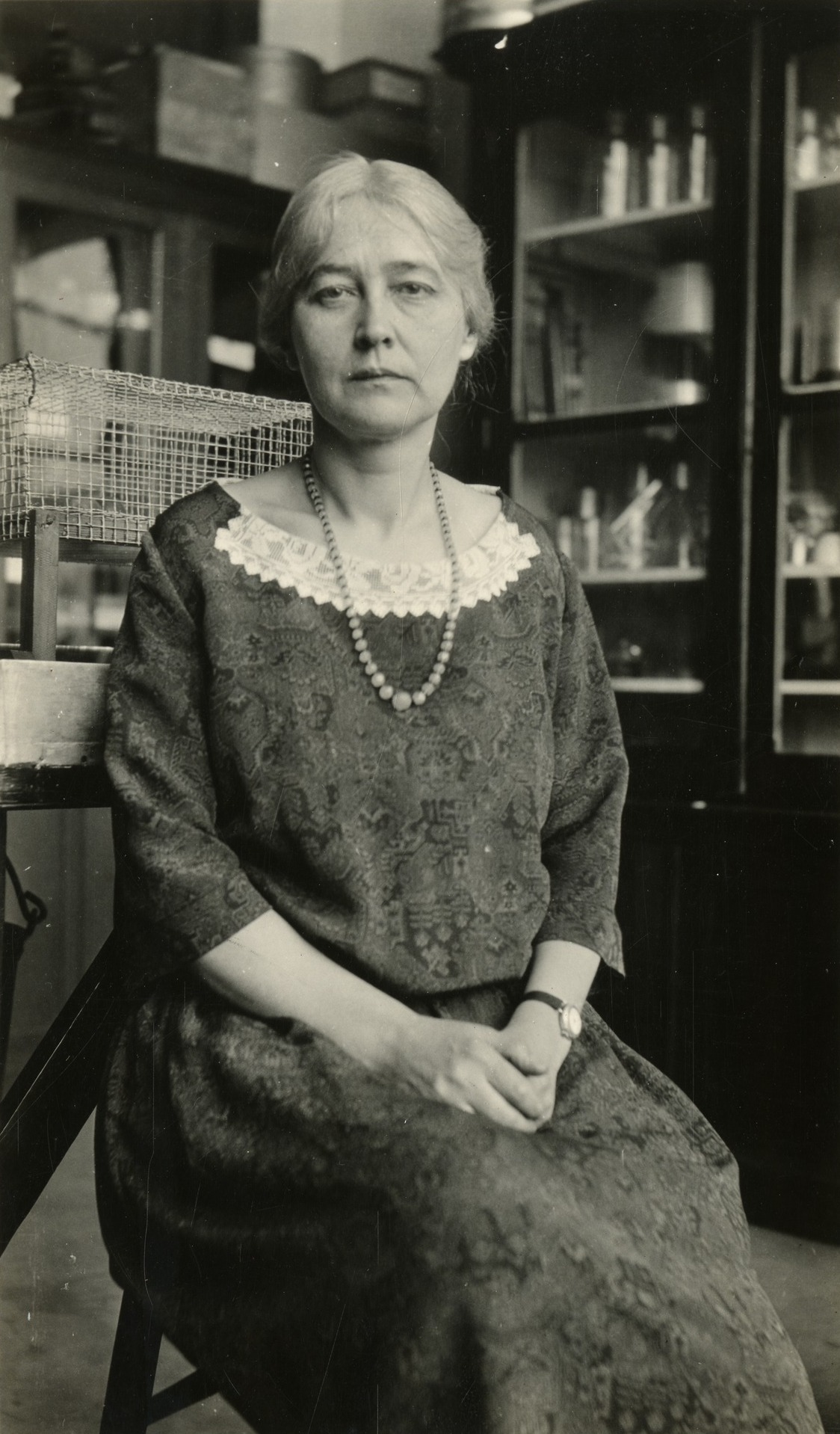
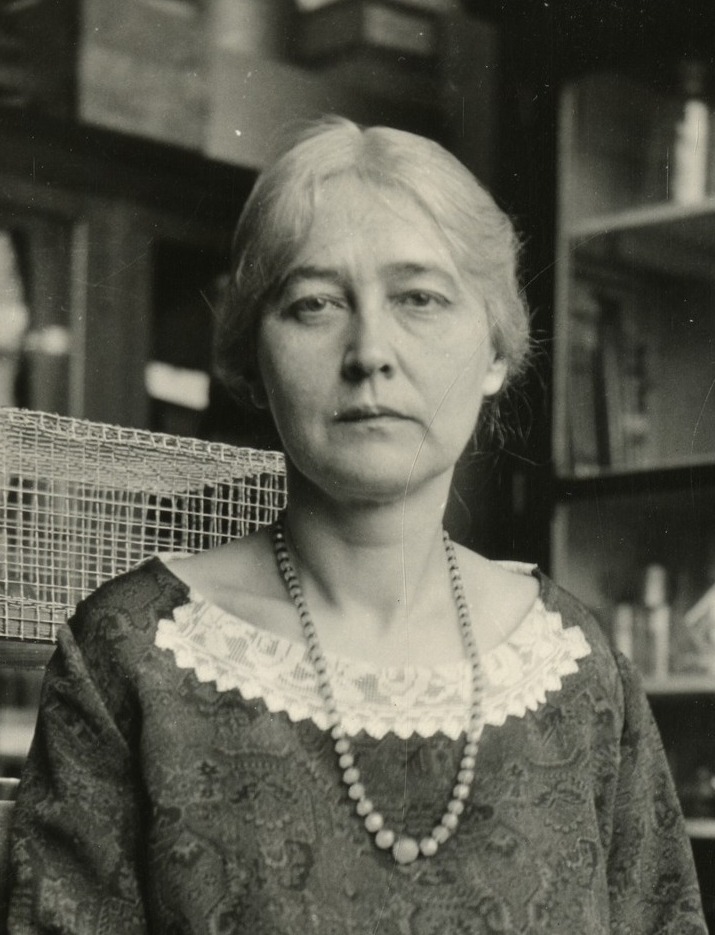
Maud Menten
Canadian physician and chemist who advanced enzyme kinetics.

via Wikipedia: University of Toronto Faculty of Medicine · see source
She is best known for co-developing the Michaelis–Menten equation, which describes the rate of enzyme-catalyzed reactions, and for inventing the azo-dye coupling reaction still used in histochemistry.
- died
- July 17, 1960, Leamington, Ontario
- field
- Medicine, biochemistry, histochemistry
- nationality
- Canadian
- known_for
- Michaelis–Menten equation, azo-dye coupling reaction
Lore & Background
Her father worked as a river pilot and boat operator, and her mother managed family business ventures. She studied medicine at the University of Toronto, earning a B.A. in 1904, an M.B. in 1911, becoming among the first women in Canada to earn a medical doctorate. Afterward, she earned a Ph.D.
Reader's Guide
This equation introduced the Michaelis constant and remains fundamental in biochemistry. Despite facing barriers to research in Canada due to her gender, she authored or co-authored more than 70 publications. Her legacy endures through the equation and histochemical technique that bear her name.
Did You Know?
- Maud Menten learned Chinook Jargon as a child growing up among settler and Indigenous communities in British Columbia.
- She was among the first women in Canada to earn a medical doctorate, receiving her M.D. from the University of Toronto in 1911.
Gallery
Frequently Asked Questions
Who is Maud Menten?
Maud Menten was a Canadian physician and chemist who made groundbreaking contributions to enzyme kinetics and histochemistry. She is best known for co-developing the Michaelis–Menten equation, a mathematical model that remains central to biochemistry.
What is the Michaelis–Menten equation?
It is a formula describing how the rate of an enzyme-catalyzed reaction changes as substrate concentration varies. Maud Menten helped derive this model, and it is still a foundational concept taught in biochemistry and pharmacology courses worldwide.
What is the azo-dye coupling reaction?
It is a histochemical staining method that Maud Menten devised to detect and visualize specific chemical compounds within tissue sections. The technique is still routinely used in pathology laboratories and biomedical research.
Why is Maud Menten important to medicine and physiology?
Her mathematical description of enzyme behavior gave researchers a precise tool for studying metabolic pathways and designing drugs. She also created a practical staining technique that made molecular identification in tissue possible, leaving a dual legacy in both theory and lab practice.
Where was Maud Menten born and when did she die?
She was born on March 20, 1879, in Port Lambton, Ontario, Canada, and died on July 17, 1960, in Leamington, Ontario. Her entire life was spent in her home province.
More in Pioneers In Medicine And Physiology 1-19
Spotted an error? Know more?
This is a living reference — every entry is fact-audited, and reader corrections feed straight into our audit queue. Suggest an edit · See this site's audit record