Peter Piot
Microbiologist who co-discovered Ebola and led AIDS research.

Unknown author · Public domain
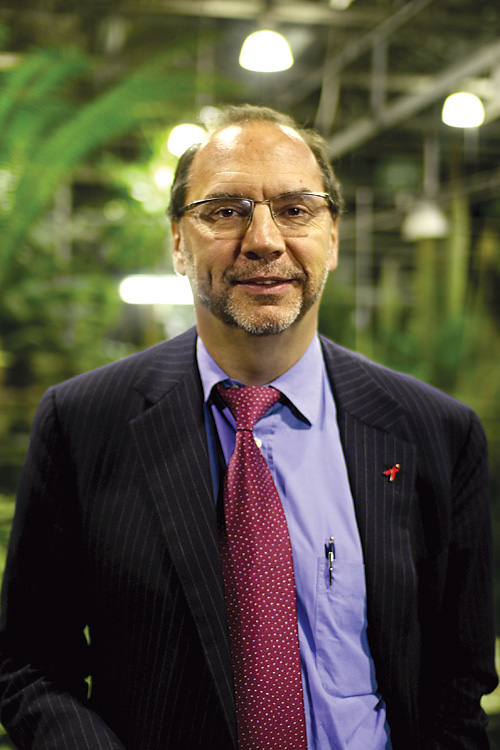
After helping discover the Ebola virus in 1976 and leading efforts to contain the first-ever recorded Ebola epidemic that same year, Piot became a pioneering researcher into AIDS. He has held key positions in the United Nations and World Health Organization involving AIDS research and management, and has served as a professor at several universities worldwide.
- born
- 17 February 1949
- field
- Microbiology
- nationality
- Belgian-British
- known_for
- Discovery of Ebola virus, AIDS research
Lore & Background
Piot was born in Keerbergen, Belgium, the oldest of two brothers and a sister. In 1976, while at the Institute of Tropical Medicine, he was part of a team that observed a Marburg-like virus in a blood sample from a sick nun in Zaire. He traveled to Zaire with an International Commission that made key discoveries about how the virus spread, helping to contain the outbreak that killed almost 300 people.
Reader's Guide
Peter Piot's significance lies in his dual role in the discovery of Ebola and his pioneering work on AIDS in Africa. He held key leadership positions, including executive director of UNAIDS and assistant director of the WHO's Global Programme on HIV/AIDS. Later, as director of the London School of Hygiene & Tropical Medicine, he criticized the WHO's response to the 2014 Ebola epidemic and advocated for changes in outbreak alert systems. His career reflects the evolution of global health responses to emerging infectious diseases.
Did You Know?
- Piot was ennobled with the title of Baron for life in the Nobility of Belgium by King Albert II in 1995.
- He is fluent in English, French, and Dutch.
- In May 2020, Piot disclosed that he had had COVID-19.
- He was appointed to the European Commission's advisory panel on COVID-19 in 2020.
Gallery
Frequently Asked Questions
Who is Peter Piot?
Sir Peter Karel, Baron Piot is a Belgian-British microbiologist born in February 1949 who became a leading global figure in the study of viral diseases, especially Ebola and HIV/AIDS. He has held senior roles in international health organizations and taught at multiple universities around the world.
What did Peter Piot discover?
In 1976 he was part of the research team that first identified the Ebola virus in the Democratic Republic of the Congo. He then helped coordinate the response to what became the very first documented Ebola outbreak.
What was Peter Piot's role in the AIDS fight?
After his early Ebola work, he shifted his focus to HIV and took on senior leadership positions within the United Nations and the World Health Organization. In those roles he helped shape global strategies for AIDS research, prevention, and treatment access.
What is Peter Piot's nationality and background?
He holds dual Belgian-British citizenship and was born in Belgium on 17 February 1949. His academic and professional career has spanned multiple countries, with professorships at several universities worldwide.
Why is Peter Piot considered a pioneer in medicine?
He sits at the intersection of two of the twentieth century's most devastating viral crises, having helped identify Ebola and then directed the international scientific response to AIDS. That combination of frontline discovery and large-scale public-health leadership makes him a defining figure in modern infectious-disease science.
More in Pioneers In Medicine And Physiology 1-19
Related in Pioneers In Medicine And Physiology
Links follow this subject's own source article.
Spotted an error? Know more?
This is a living reference — every entry is fact-audited, and reader corrections feed straight into our audit queue. Suggest an edit · See this site's audit record