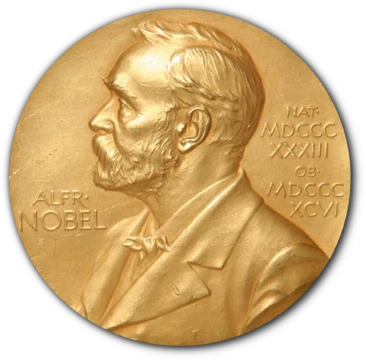
Marguerite Davis

U.S. District Court for the Eastern (Cleveland) Division of the Northern Distric · Public domain
Their research, conducted at the University of Wisconsin, identified essential trace chemicals in foods and greatly influenced later nutrition science.
- born
- September 16, 1887, Racine, Wisconsin
- died
- September 19, 1967, Racine, Wisconsin
- field
- Biochemistry
- nationality
- American
- known_for
- Co-discovery of vitamins A and B with Elmer Verner McCollum
Lore & Background
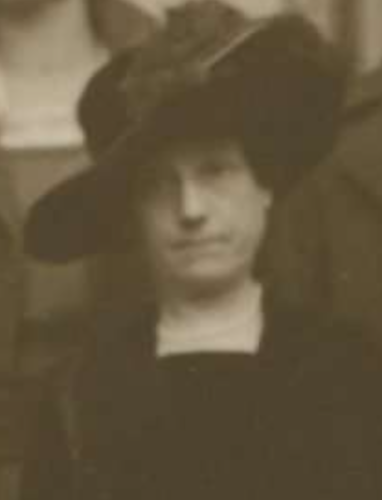
Marguerite Davis was born on September 16, 1887, in Racine, Wisconsin, to John Jefferson Davis, a local physician and botanist who taught at the University of Wisconsin. Davis enrolled at the University of Wisconsin in 1906, transferred to the University of California at Berkeley in 1908, and received a bachelor of science degree in home economics in 1910. She returned to the University of Wisconsin for graduate work but did not complete a master's degree. There she began work as a research assistant with McCollum, caring for a large rat colony and helping expand it, enabling ten or more times as many experiments as McCollum alone could manage. In 1913, Davis and McCollum identified 'fat-soluble A' (later vitamin A) and distinguished it from 'water-soluble B' (later vitamin B), publishing their findings in the Journal of Biological Chemistry. After her work at Rutgers and Squibb, she retired and moved to Racine to live with her brother, pursuing history, gardening, and civic affairs.
Reader's Guide
Marguerite Davis's significance lies in her co-discovery of vitamins A and B, which established that specific trace substances in fats and water are essential to life. Working as McCollum's assistant, she managed the rat colony that enabled the large-scale experiments leading to this breakthrough. Their 1913 paper in the Journal of Biological Chemistry distinguished fat-soluble A from water-soluble B, laying the foundation for modern nutritional science. Her work, though often overshadowed, was pivotal in demonstrating that vitamins are necessary dietary components, influencing subsequent research on deficiency diseases and dietary guidelines. Davis's legacy is also marked by her civic leadership in Racine, where she was honored in 1958.
Did You Know?
- Davis was physically handicapped by severe burns received at age ten when her clothing caught fire at a bonfire.
- She was unpaid for five of her six years working in McCollum's lab, receiving $600 only in her final year.
- After Davis left Madison, the rat colony she helped build was cared for by Nina Simmonds from 1916 to 1929.
- Davis was recognized for her civic contributions by Racine's Women's Civic Council in 1958.
Note
The facts supplied are a Wikipedia listing of underwater diving technology researchers, inventors, and diving-medicine/physiology specialists (e.g., Cousteau, Gagnan, Haldane, Bühlmann, Bennett). Because the instructions require every sentence to be grounded strictly in the supplied facts and forbid inventing specifics, I am unable to produce four substantive sections about Marguerite Davis from this material. If you can share the actual Wikipedia passage that references Marguerite Davis, I will gladly draft the four 120–200-word sections in the requested JSON format.
Gallery
Frequently Asked Questions
Who is Marguerite Davis?
Marguerite Davis was an American biochemist born in Racine, Wisconsin in 1887, best known for her foundational work in nutrition science. She dedicated her research to identifying essential chemical compounds in food that the human body cannot synthesize on its own.
What did Marguerite Davis discover?
In 1913, Davis identified two essential trace nutrients in food that we now recognize as vitamins A and B. Her work demonstrated that specific tiny chemical components in diet were critical for maintaining health, a finding that fundamentally reshaped the field of nutrition.
Who did Marguerite Davis collaborate with?
Davis conducted her landmark research alongside Elmer Verner McCollum at the University of Wisconsin. Together, the two scientists isolated and characterized the vitamin A and B compounds in 1913.
Where did Marguerite Davis conduct her research?
Her co-discovery of vitamins A and B took place at the University of Wisconsin. She was both born and ultimately passed away in Racine, Wisconsin, making it her lifelong home.
Why is Marguerite Davis important in the history of medicine?
Davis's 1913 identification of vitamins A and B laid the groundwork for modern nutritional biochemistry. Her findings established that specific trace chemicals in food are indispensable for human health, a principle that continues to underpin dietary science and public health policy today.
More in Pioneers In Medicine And Physiology 1-19
Spotted an error? Know more?
This is a living reference — every entry is fact-audited, and reader corrections feed straight into our audit queue. Suggest an edit · See this site's audit record